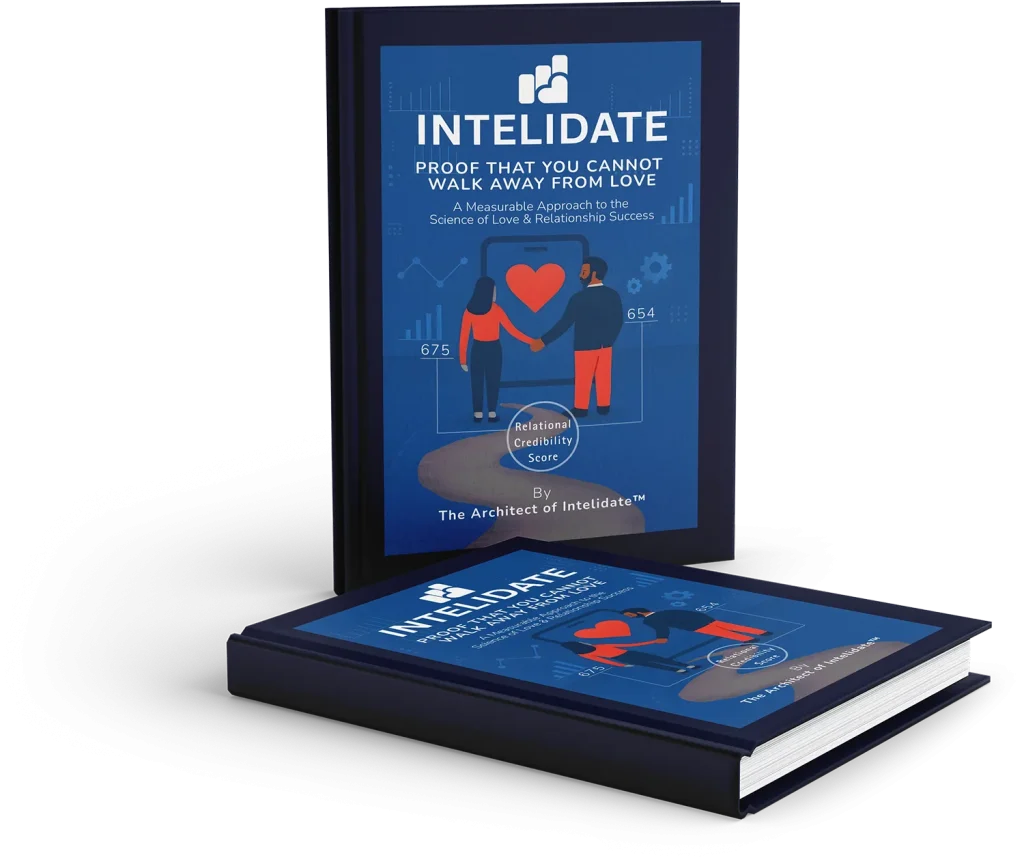
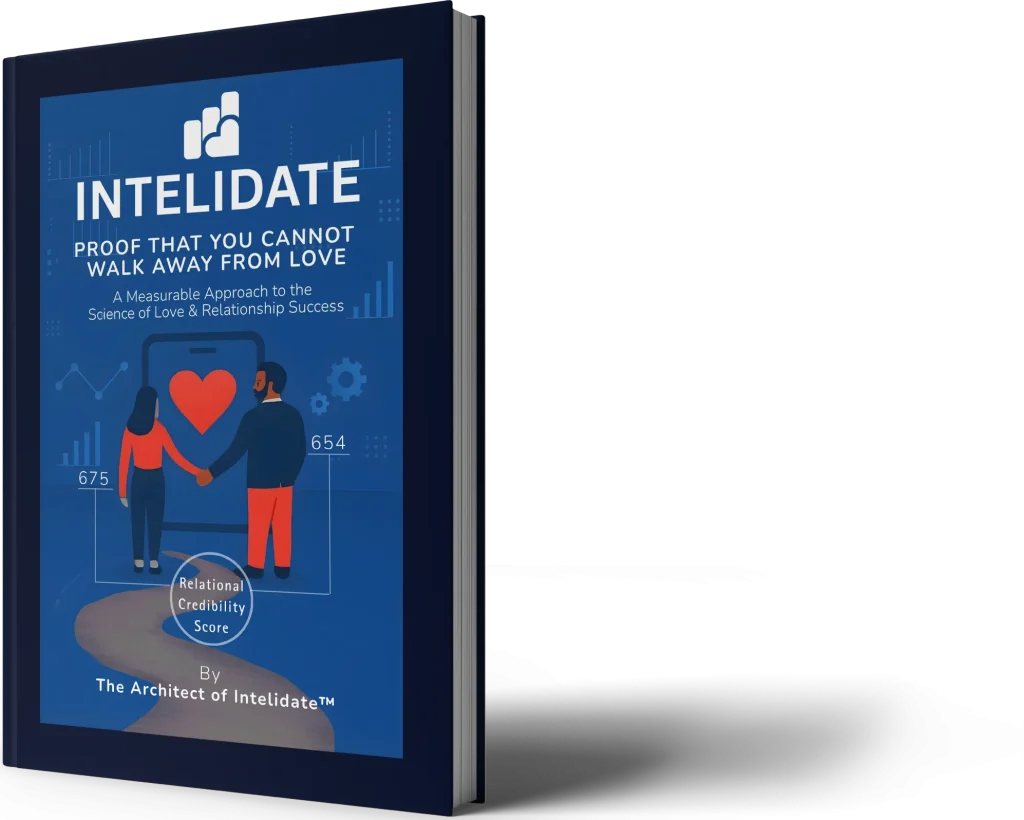
“Love is not a mystery. It is measurable.”
Early readers are already sharing their take. The official release is December 1, 2026. Sign up below to be first in line when it drops, and add your review when you get yours.
Use the form below to leave a review. Enter your name, email, and share your thoughts below:
Readers who have already gotten are already leaving reviews. See them below.
First off, it’s written extremely well. It doesn’t talk at you or try to sound smarter than the reader. It feels grounded, practical, and real. Honestly, I can already see this being a number one best seller, and I wouldn’t be surprised if it eventually turns into a movie or series because the concepts hit that deep.
The section on relational outsourcing really stood out to me. That part alone was eye-opening. What I appreciated most is that it gives clear, relatable examples for both men and women. A lot of relationship books lean one way and tell women what they want to hear or beat men over the head. This one doesn’t do that. It creates accountability for both sides, and as a man, I respected that. It felt fair, honest, and overdue.
What really separates Intelidate from other books is that it measures everything. I’ve never seen relationships broken down in a way that’s this structured and this clear. Coming from a military background, that mattered to me. There’s a standard, a process, and a way to assess where things actually go off track instead of just guessing or blaming feelings.
I also loved how the book standardizes terms in the dating and relationship process. The glossary is genius. No exaggeration, some of these terms should be in the dictionary. It finally gives people a shared language to talk about relationships without confusion or mixed meanings.
Bottom line, this book goes way beyond typical relationship advice. It’s thoughtful, balanced, and practical. Intelidate doesn’t just talk about love, it explains it in a way you can actually understand, measure, and apply. This is a game changer.
There are many books about dating. Far fewer are about becoming and fewer still offer a way to measure that becoming without reducing love to performance or fantasy. Intelidate stands apart because it reframes relationships not as a search for completion, but as an extension of a life already rooted in self-knowledge, self-respect, and inner alignment.
What I appreciated most about this book is its unwavering insistence that love is not something we chase, extract, or outsource. Instead, it is something we embody. As the book defines it, love is “the balance of Self-Awareness, Self-Discipline, and Self-Appreciation that enables a person to give and receive connection, consideration, and commitment in a way that nurtures growth and stability.” That definition alone quietly dismantles much of modern dating culture.
Rather than centering relationships as a cure for loneliness or a validation of worth, Intelidate invites the reader to take responsibility for their inner architecture first. It asks better questions than “Do they like me?” or “Where is this going?” It asks, who am I becoming in this process? And just as importantly, are my actions aligned with the love I say I want?
One of the book’s strongest contributions is its insistence on self-love as an active, measurable practice, not a slogan. Self-love here is not indulgence or detachment. It is rigor. The framework of Self-Awareness, Self-Discipline, and Self-Appreciation offers a grounded lens through which to evaluate not only potential partners, but one’s own patterns, reactions, and integrity. As the book states plainly, “You don’t show up looking to be rescued, validated, or completed. You arrive already whole.” That orientation changes everything.
I was particularly drawn to how Intelidate provides a framework for meaningful conversation early in the dating journey. These conversations are not rooted in interrogation or fantasy, but in shared clarity. The language around courtship, companionship, partnership, and inspirationship gives couples a way to talk about expectations and alignment without moralizing or rushing outcomes. It becomes easier to ask: Are we building something sustainable, or just enjoying chemistry?
Equally compelling is the book’s emphasis on objective and observable behavior. Instead of encouraging readers to rely on potential, charisma, or emotional intensity, Intelidate brings attention back to patterns, such as how time, energy, intimacy, and resources are actually being exchanged. In a culture that often confuses intensity with intimacy, this distinction feels both sobering and liberating. As the book reminds us, “Without self-love, we confuse attachment for affection and sacrifice for connection.”
What makes this approach especially refreshing is that it never asks the reader to shrink, harden, or disengage. It doesn’t promote emotional detachment disguised as empowerment. Rather, it calls for internal solidity that allows love to be an overflow, not a negotiation. “When self-love is present, love becomes contribution, not compensation,” the book notes. That sentence lingers.
Ultimately, Intelidate is not about controlling outcomes or optimizing romance. It is about cultivating credibility with yourself first. It offers a mirror more than a map, and in doing so, restores agency to the individual without closing the door to intimacy. For anyone who values depth over drama, alignment over illusion, and growth over performance, this book provides both language and structure for dating from a place of wholeness.
Not because love is scarce, but because it is sacred.
Hey, friend! Sorry this took me so long! I did reading while I was doing family care in FL and jotted some notes. Since pickleball is canceled because of snow, I’m finally just organizing those thoughts by the fireplace. Yep, I know you can picture it!
1) I really liked how the book defines self-love as the balance of Self-Awareness, Self-Discipline, and Self-Appreciation, and basically argues that most relational challenges stem from deficits in these internal skills, not from the partner or the relationship itself. I’m a concrete sequential kind of thinker, so it puts love as a measurable, observable behavior not just an emotion.
2) “Love Look-Alikes” (infatuation, attachment, validation-seeking, familiarity, etc.) and how they are often mistaken for real love – OMG! I see this with my nephew right now! I like how the book recognizes intensity vs. intimacy, attachment vs. alignment, chemistry vs. credibility. This is tough, but also somewhat intuitive that love has a structure not just a feeling.
3) I honestly think you could write a whole book just on the T.I.M.E. framework. Seriously, this is a lot to unpack!
4) Since I’ve been married for 32 years, love, relationship, it’s always evolving and in a form of recalibration. The book treats relationships almost like systems you can measure, tracking patterns, behaviors, and even credibility. For those of us who’ve been together a long time and mostly rely on history and instinct, the idea of “scoring” does feel new – well, and not new all at the same time. The book offers different parameters to consider and that’s powerful to break down for a conversation.
The only “red flags” I see aren’t really issues, just places where readers might need a gentle reminder. The framework is meant to spark reflection, help people recognize habits, and explore patterns. It’s not designed for judging, scoring each other, or turning relationships into a competition. For those with a more competitive streak, the numbers could start to feel like a report card, and that’s definitely not the intention. Relationships aren’t spreadsheets; they’re full of texture, seasons, nuance, contradictions, and messiness. The framework gives helpful language for making sense of those dynamics, but real life always brings more context and sometimes that context feels like a wild ride at a theme park! In the end, it’s about that balance, right?
Congratulations on bringing this book to life! It’s clear how much thought, intention, and heart went into creating a framework that helps people understand themselves and their relationships in deeper, more meaningful ways.
My best,
~M
I really love the book. Emotional intelligence (as well as other things) affects the mindset so much. This book should be read by young and old, single people, and most definitely military people. It is really needed. I talk to the girls about those same topics in the book. You did an amazing job. I am so happy and proud of you!
Jide,
I read Intelidate through the lens of my marriage and my family, not as a theory or dating advice, but as a mirror. What struck me most was how consistently the book returns responsibility to the individual without stripping away compassion for the relationship itself.
The (T.I.M.E.) framework helped me slow down and ask better questions about how I show up at home: not just whether I love my wife, but how that love is experienced, measured, and sustained over time. Your emphasis on Self-Awareness, Self-Discipline, and Self-Appreciation forced me to look at areas where I may be present, but not always intentional—available, but not always aligned.
I will reread it.
I am excited for you, Jide. The concept is solid!
Best Regards,
Kareem Castillo
As a 27 year old single Black woman working in marketing and someone who intentionally promotes and supports veteran-owned businesses, reading your book felt personal in the best way. You can tell that this isn’t another relationship book built on vibes or recycled advice. It’s structured, thoughtful, and rooted in lived experience, discipline, and accountability (Go Army!).
What stood out most to me was the idea of measuring relationships without removing the humanity from them. The Relational Credibility Score and the way Intelidate breaks love down into time, energy, intimacy, and money completely changed how I think about compatibility. It felt refreshing to see relationships treated with the same intentionality we apply to careers, finances, and personal growth, especially from a perspective that understands commitment and service.
I’m also really excited for the app because of how practical it’s going to be. The idea of being able to track growth, patterns, and alignment over time, instead of relying on feelings alone, is something I honestly haven’t seen done well anywhere else. As someone in marketing, I can confidently say this book and app are going to resonate across all age groups, especially with people who are tired of high risk dating and are ready for dating to be fun and productive again.
Absolutely loved it!
Thanks for sharing!
Best regards,
Treazure Owens
Intelidate is best understood not as a traditional book, but as a handbook—a practical companion designed to guide readers directly into an interactive ecosystem that includes an app and live seminars. This framing feels intentional and effective: the reader isn’t simply invited to consume ideas, but to apply them, track progress, and ultimately discover their own personal credibility score through real engagement.
One of the handbook’s strongest qualities is its accessibility. It is easy to read without ever feeling simplistic. The concepts unfold logically, each building on the last, making the framework feel intuitive and grounded. What truly sets Intelidate apart from other relationship-focused projects, however, is that everything is measurable. Rather than relying on vague advice or abstract ideals, the handbook introduces concrete metrics that transform self-reflection into something actionable and trackable.
A particularly compelling distinction is the way Intelidate clearly separates love as a noun from love as a verb. This clarity challenges common assumptions and reframes how relationships are evaluated—not by intention alone, but by consistent, observable behavior. This lens alone positions the handbook as a refreshing departure from romanticized or purely emotional models of connection.
While many relationship frameworks reference time as evidence of commitment, Intelidate fundamentally reimagines it through the T.I.M.E. framework — Time, Intimacy, Money, and Energy. By treating these elements as relational assets, the handbook introduces a measurable system that exposes how love is actually practiced. This approach is transformative: love is no longer inferred from words, duration, or desire, but assessed through patterns of investment. The implications are striking. Relational credibility becomes visible, misalignment becomes harder to ignore, and self-awareness becomes unavoidable. In this way, Intelidate turns love into an accountable exchange rather than an abstract belief.
At the foundation of it all is the principle of Self-Love, which is not treated as a standalone chapter or buzzword, but as a thread woven throughout every section of the handbook. Its treatment is grounded and practical, emphasizing accountability, awareness, and internal alignment. This integration reinforces the idea that relational credibility begins internally and radiates outward into every interaction.
Ultimately, Intelidate succeeds in doing something rare: it does not attempt to be the final word on relationships, but rather the entry point. The handbook builds genuine anticipation for the accompanying app and seminars, making it clear that true transformation occurs when readers move beyond understanding the concepts and begin actively applying them. For anyone interested in relationships that are intentional, measurable, and rooted in self-awareness, Intelidate offers a compelling and modern framework worth exploring.
Enter your name and email below and get notified when the Book is released and when the Intelidate App is launched!
Enter your name and email below and get notified when the Intelidate App Launches and get notified when the book is released!